How to Read a New-Car Window Sticker in 2026
A line-by-line guide to the Monroney label. What every number means, where dealers add markup, and how to use the sticker as your negotiation tool.
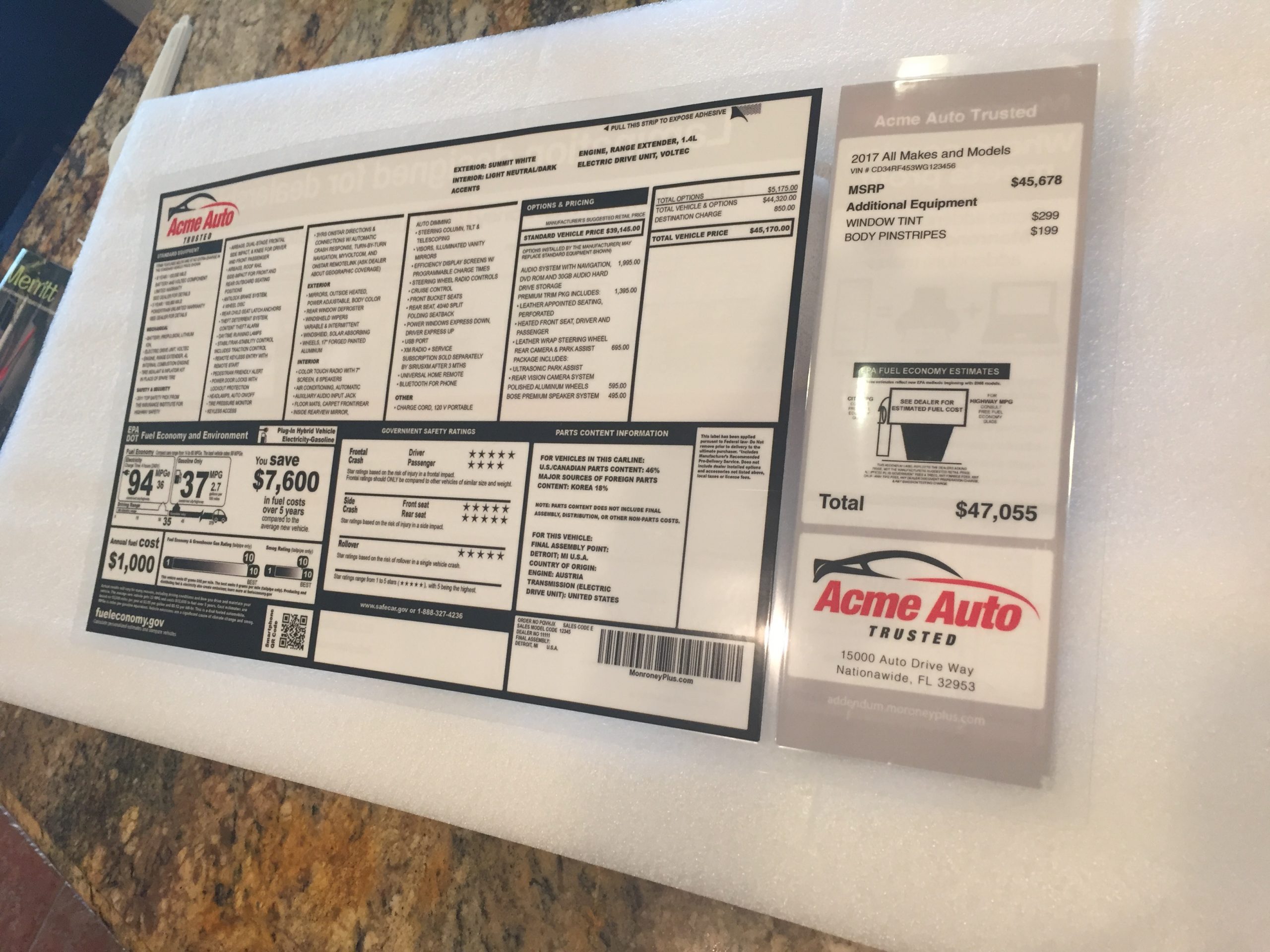
The window sticker is the only document at the dealership that's required by federal law to be accurate. It's been called the Monroney label since the 1958 Automobile Information Disclosure Act forced manufacturers to disclose price, options, and fuel economy on every new vehicle sold in the US. Read it well and you walk in with the same information the salesperson has. Read it badly and you sign for things you didn't plan to buy.
Here's every section, what it actually means, and which lines are the ones to push back on.
1. Top section: model, trim, drivetrain, color
The header looks routine but it's worth checking against your invoice and the keys in the salesperson's hand. The exact model code, body style, drivetrain, and exterior/interior color combination must match the car you're buying. Mismatches happen more often than dealers admit, especially with similar trims sold in different packages. If the sticker says XSE Premium and the keys are tagged XSE, you have a different car.
2. Standard equipment
This is the long block of features that come with the trim at no extra cost. Read it. If the salesperson is selling you on something that's listed here as standard, you're being upsold on something you already have. Common targets: floor mats, blind-spot monitoring, wireless charging, certain driver-assist suites.
3. Optional equipment
This is where the price builds. Each line has a name and a dollar amount. Packages are bundled options sold under one name, like Premium Plus Package or Technology Group. The line items below show what's inside. The total in this block is the difference between the base trim price and the as-built MSRP.
A few patterns to flag:
- Single-line packages over $3,000. Worth pricing as standalone options on a competitor's build sheet to see if the package math is fair.
- Dealer-installed equipment. This is sometimes printed on a separate addendum sticker glued next to the Monroney. Tinted windows for $895, paint protection film for class="relative z-10",595, wheel locks for $295. None of it is required. All of it is negotiable.
- VIN-etching, "theft protection," "fabric protection." These addendum charges are pure margin. Decline them in writing on the buyer's order before you sign.
4. Destination and delivery
This is the manufacturer's flat fee to ship the vehicle from the factory or port to the dealer. It's listed on every Monroney for the same model, no matter where you buy. Negotiating it down doesn't work. Some dealers will pretend it does so they can claim a "discount" they fabricated. Watch for this trick.
5. Total MSRP
Sum of base price + options + destination. This is the number above which the dealer should not be selling, except in narrow market conditions on hot models. For 2026, dealer markups (the "ADM" or "Market Adjustment" lines on addendum stickers) have softened compared to 2022 to 2023. Most non-supply-constrained vehicles can be had at MSRP or below. The exceptions: Toyota Land Cruiser, Lexus GX, Lotus Eletre, and certain limited Ford Raptor R allocations.
6. Fuel economy and environment
The big EPA panel shows the MPG (or MPGe for EVs and plug-ins) along with estimated annual fuel cost and a range comparison vs. similar vehicles. It also shows the EPA smog rating and greenhouse gas score. A few things buyers miss:
- The "annual fuel cost" assumes 15,000 miles per year and a fuel price set by the EPA, not what you actually pay. If you drive 8,000 or 25,000 miles a year, redo the math.
- For PHEVs, the panel shows two numbers: electric-only MPGe and gas-only MPG. The blended figure on the dealership website might not match either.
- For EVs, the panel shows estimated range, not the manufacturer's marketing number. Sometimes they differ by 20+ miles.
7. Vehicle parts content (the AALA panel)
The American Automobile Labeling Act requires manufacturers to disclose where the vehicle's parts come from and where final assembly happens. Most buyers skim past this. It matters for two reasons: 2026 federal procurement rules, and the leftover qualification logic for any state EV/clean vehicle credits that still reference North American final assembly.
8. The QR code (newer stickers)
Most 2024-and-newer Monronies have a QR code that links to the manufacturer's online configurator with this exact vehicle's build sheet. Scan it. If the configurator returns a different price than the sticker, ask why. The most common cause is an option dropped from the build that the dealer didn't update.
How to use the sticker as a negotiation tool
The sticker has three numbers that matter: the MSRP, the destination, and any market adjustment addendum. Here's the move:
- Verify the MSRP against the manufacturer's site for the same VIN or build code.
- Decline every line item on the addendum sticker (the second one, taped next to the official Monroney). Get the decline in writing on the buyer's order.
- Make your offer against MSRP minus the manufacturer's published incentives, then negotiate destination separately if the dealer claims any flexibility there (they don't have any).
The Monroney is a contract document, not marketing. Treat it that way. Read every line before you sign anything else.
Related articles
How to Buy a Used EV in 2026: Battery, Warranty, Pricing
Used EV prices are down. Here's how to check battery health, transfer the warranty, and avoid the three traps that catch first-time used-EV buyers.

How to Finance a New Car in 2026: APR, Terms, Tricks
What APR you actually qualify for, why dealers mark up rates, how to negotiate financing, and the four financing traps to avoid in 2026.

How to Trade In a Car in 2026: Get Top Dollar
Real trade-in values, payoff timing, equity math, and how to avoid losing money to dealer trade-in tricks. A complete 2026 buyer's guide.